
White Hat vs. Black Hat: The thin line between a tech career and a criminal record.

|
||
|
|
||
|
||
|
White Hat vs. Black Hat: The thin line between a tech career and a criminal record. |
||
|
Hi
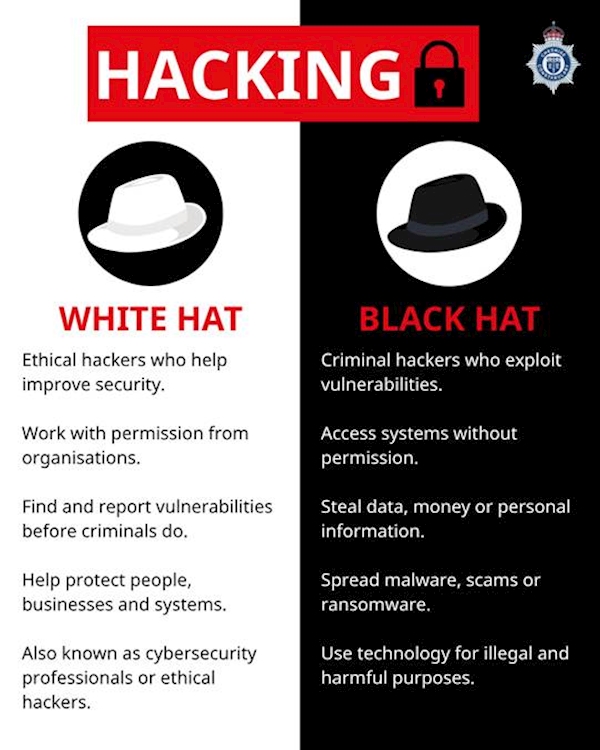
When it comes to coding, gaming, and digital systems, young tech enthusiasts often hear about "hacking." But in the tech industry, the community is divided into two main groups: White Hats (the good guys) and Black Hats (the cybercriminals).
The technical skills needed for both are exactly the same. The only differences are authorization, intent, and the law.
As part of our #CyberChoices campaign, we want to look at how a young person's curiosity can accidentally cross the line—and remind everyone about the strict realities of the Computer Misuse Act 1990.
The Two Sides of Hacking
Black Hat Hackers: These individuals exploit security flaws for personal gain, spite, amusement, or financial reward. They break into servers, launch DDoS attacks, or steal data without permission. In the eyes of the law, they are cybercriminals.
The Reality: The Computer Misuse Act 1990 Many young people believe that if they don’t steal money or cause permanent damage, they haven't committed a crime. This is a dangerous misconception. Under the Computer Misuse Act 1990, there are three primary levels of offences that tech-savvy youths frequently trigger:
Choose the White Hat Path
The National Crime Agency Cyber Choices framework is designed to ensure talented young people don't ruin their lives with a Section 1 or Section 3 conviction. A criminal record under the Computer Misuse Act can result in seized tech, being banned from internet access, and being barred from major universities and tech corporations. Alternatively, channelling that exact same energy into becoming a professional White Hat open doors to an incredibly lucrative, high-demand legal career path.
What Parents Can Do
Let's guide their talent safely.
Kind regards Stephen Blake Cyber Prevent Officer
| ||
Reply to this message | ||
|


|